
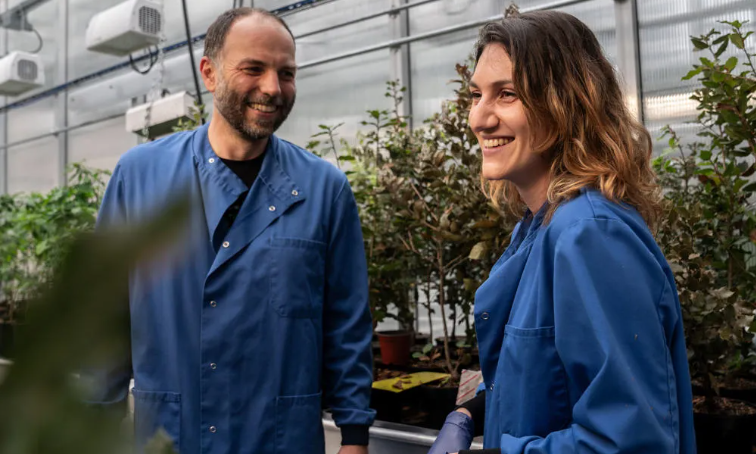
Global South Fellowship Program 2026 — Fully Funded Visiting Fellowship at the University of Birmingham and the University of Illinois
If you are an early-career researcher from a university in the Global South and you have been looking for a funded opportunity to spend time at a world-class institution, develop international collaborations, and gain insight into how research is organised and conducted at a leading UK or US university, this fellowship was designed for you.
The Global South Visiting Fellowship Program is a joint initiative between the University of Birmingham (UK) and the University of Illinois Urbana-Champaign (USA). It funds early-career researchers from Global South universities to spend up to three months at one of these institutions, covering travel, accommodation, and a monthly living stipend.
The application deadline is 29 May 2026, which is approaching. If this is relevant to your work, you need to act immediately.
What Is the Global South Fellowship Program?
The fellowship is built around a specific and genuine purpose, not just sending researchers abroad for the sake of it, but enabling meaningful professional development, research insight, and lasting international partnerships.
The programme has three stated aims that are worth understanding clearly before you apply:
Professional development for early-career researchers. The fellowship gives you direct access to how research is organised, conducted, and administered at two of the world’s leading research universities. For researchers from institutions where international exposure is limited, this insight is genuinely valuable — understanding how top universities structure research programmes, manage grant funding, navigate peer review, and build international partnerships gives you a practical framework you can bring back home.
Research collaboration. This is not a passive observational visit. Fellows are expected to engage actively with the research environment — attending seminars, working with their host researcher, contributing to ongoing projects or discussions. The goal is a genuine research relationship, not a tourism experience dressed up as academia.
Partnership development with the Global South. Both Birmingham and UIUC have explicit institutional commitments to building stronger research partnerships with Global South institutions. The fellowship is partly a mechanism for identifying and developing those partnerships — meaning the universities gain as much as the fellows do.
What the Fellowship Covers
| Benefit | Amount / Detail |
|---|---|
| Monthly stipend | £1,500 per month |
| Duration | Up to 3 months |
| Total stipend value | Up to £4,500 |
| Travel expenses | Up to £850 |
| Accommodation | On-campus accommodation can be booked on your behalf — cost deducted from stipend |
The £1,500 monthly stipend is designed to cover living expenses and accommodation. If you opt for on-campus accommodation, the cost is deducted from your stipend, meaning there is no separate accommodation payment, but your net monthly living allowance will be lower. Private accommodation options and support with organising housing are available on request.
To be realistic: £1,500 per month in Birmingham is workable, particularly if you choose university accommodation and budget carefully. Birmingham’s cost of living is significantly lower than London’s. UIUC is located in Urbana-Champaign, Illinois, a university town with a much lower cost of living than major US cities, where £1,500 equivalent goes further.
The £850 travel allowance covers return economy flights. For researchers flying from West Africa, East Africa, South Asia, or Latin America, check current flight prices to Birmingham or Chicago — the allowance may not cover the full cost of some routes, so factor this in before applying.
Who Can Apply: Eligibility
The eligibility criteria are deliberately flexible, which is worth noting.
Geographic eligibility: The fellowship is specifically for researchers from universities in the Global South. This broadly encompasses Africa, Asia (excluding Japan, South Korea, and other high-income Asian economies), Latin America, and the Caribbean. If your institution is in Nigeria, Ghana, Kenya, South Africa, India, Brazil, Pakistan, Bangladesh, or a similar country, you are in the target group.
Career stage: The programme targets early-career researchers. The fellowship documentation explicitly states that there is no fixed definition of “early-career”; the term is relative and varies by discipline and year. What is fixed is that you must have completed a doctorate to be eligible. If you do not yet have a PhD, you cannot apply.
Subject areas: The fellowship explicitly welcomes applications in three priority areas:
- Education access and equity
- Global health
- Sustainability and climate action
However, and this is important, the programme notes state there is flexibility around this. If your research sits adjacent to these themes or connects to them in a meaningful way, it is worth applying rather than self-selecting out. If your research is entirely unconnected to these three areas, the fit is weaker but not impossible.
The Host University: A Critical Step You Must Take First
This is the element of the application that most people underestimate — and where many applications are underprepared.
Before you apply, you must identify a suitable host at either the University of Birmingham or the University of Illinois Urbana-Champaign. The fellowship documentation is explicit: reach out directly to potential hosts to explore the possibility of hosting your application.
This is not optional. Without a host who is aware of your application and broadly supportive of it, your application is significantly weaker. The selection panel will want to see that there is a genuine research fit and a willing host on the receiving end.
How to find your host:
For the University of Birmingham, use the staff profiles directory at birmingham.ac.uk/staff/profiles to browse academics by faculty and research interest. Filter by the relevant department, Education, Global Health, Engineering, Geography, or whatever aligns with your research, and read the profiles of academics whose work overlaps with yours.
For UIUC, similarly browse the departmental staff pages at illinois.edu to identify researchers in your field.
Once you have identified two or three potential matches:
Write a focused, specific email. Do not send a generic “I would like to come to your university” message. Explain specifically what your research is about, why their work is relevant to yours, what you hope to gain from the collaboration, and what you believe you can contribute. Keep it to three to four paragraphs. Reference one or two of their specific publications or projects to demonstrate you have actually read their work.
Be direct about the fellowship. Tell them you are applying for the Global South Visiting Fellowship and ask whether they would be willing to host your visit. Most academics are straightforwardly receptive to this kind of direct inquiry from researchers whose work genuinely aligns with theirs.
Follow up once if no response after one week. Academics have full inboxes. A single polite follow-up is appropriate.
Given that the deadline is 29 May 2026, you need to begin this outreach process immediately, today if possible. Finding a host, allowing time for their response, and then completing your application takes time that is running short.
Key Dates — Move Immediately
| Milestone | Date |
|---|---|
| Application deadline | 29 May 2026 |
| Application results announced | 25 June 2026 |
| Fellowship period | July 2026 – June 2027 |
| Funding availability | Up to 3 months within the fellowship period |
The fellowship period runs from July 2026 to June 2027, but the funded months are only three months within that window. You and your host will agree on the specific timing of your visit within this period, giving reasonable flexibility around your academic schedule.
What Makes a Strong Application
Based on the programme’s stated aims and the structure of the fellowship, here is what will distinguish a competitive application from one that does not move forward.
A specific, credible research agenda. The fellowship is not for general professional development — it is for researchers with a defined project or research question that will benefit from access to Birmingham or UIUC’s specific resources, people, or infrastructure. Your application needs to articulate clearly what you will work on during the three months, why this particular institution is the right place to do it, and what you will produce or advance during the visit.
A genuine connection to at least one of the three priority themes. Education access and equity, global health, and sustainability and climate action are broadly defined — most serious academic research can connect to at least one of these themes if framed thoughtfully. The connection needs to be honest and substantive, not superficial. Do not claim your research is about global health if the connection requires five degrees of separation.
A confirmed or provisionally interested host. As discussed above, a host who is aware of and supportive of your application is a significant advantage. Ideally, mention in your application that you have been in contact with a specific academic and that they have expressed interest in hosting your visit.
Evidence of existing research output. Publications, conference presentations, research reports, or a strong doctoral thesis — whatever your career stage, the selection panel wants to see evidence that you are an active researcher, not someone who completed a PhD and then stopped producing research.
A clear plan for what happens after. The fellowship explicitly aims to develop lasting partnerships, not one-off visits. If you can articulate how this fellowship fits into a longer-term plan — a joint research project, a future grant application, a student exchange, or a co-authored paper- your application demonstrates alignment with the programme’s actual goals.
Why the University of Birmingham and UIUC
Both institutions deserve a brief introduction for researchers who may be less familiar with them.The
University of Birmingham is a Russell Group research university founded in 1900, consistently ranked among the top 100 universities in the world. It has particularly strong research programmes in public health and epidemiology, education, engineering, economics, and the social sciences. The city of Birmingham is the UK’s second-largest city, diverse, well-connected, and significantly more affordable than London.
University of Illinois Urbana-Champaign (UIUC) is one of the United States’ top public research universities, ranked consistently among the world’s top 50 institutions overall and top 10 in several specific fields, including engineering, computer science, and agriculture. It is located in the twin cities of Urbana and Champaign in central Illinois, a classic American university town environment with a strong international research community and a cost of living far below major US cities.
For a researcher from the Global South, spending three months at either institution means access to world-class libraries and research databases, exposure to how top-tier research is funded and conducted, and the opportunity to build relationships that can lead to lasting international collaboration.
Honest Assessment: Is This Worth Applying For?
Yes, for eligible early-career researchers in the right fields, this is a genuinely valuable opportunity.
The combination of travel funding, a monthly stipend, and three months of protected research time at a leading international institution is significant. The dual UK/USA university partnership adds flexibility and range. The priority areas, global health, education equity, and sustainability, are broadly defined enough to accommodate a wide range of research profiles.
The main realistic challenges are the tight deadline and the host-finding requirement. Both are manageable if you act today. The deadline is 29 May 2026 — less than two weeks away at the time this is published. If you are seriously considering applying, the time for consideration is over. Start the host outreach now.
Results are announced on 25 June 2026 — a quick turnaround that means you will not wait long to find out.
FAQ
Is this fellowship open to Nigerian researchers? Yes. Nigeria is firmly in the Global South. Researchers at Nigerian universities in relevant fields are among the target group for this fellowship.
Do I need to have a host confirmed before I apply? The fellowship guidance says to reach out to potential hosts before applying. A confirmed or provisionally interested host significantly strengthens your application. Begin this outreach immediately.
Can I choose whether to go to Birmingham or UIUC? Yes, you apply to one institution and identify a host there. Choose based on where your research fit is strongest.
Is the £850 travel allowance enough to cover my flights? Possibly, it depends on your country of origin and when you book. For some African routes to Birmingham, £850 is workable. For longer routes or late bookings, you may need to supplement it. Factor this in before applying.
What happens if no on-campus accommodation is available? The fellowship documentation explicitly notes there is no guarantee of university accommodation. Private accommodation options and support are available on request — reach out to the programme team when you apply to understand what is available.
Can I apply if my research is not directly in one of the three priority areas? The programme states there is flexibility around the subject areas. If your research connects meaningfully to education equity, global health, or sustainability, apply. If it is entirely unrelated, the fit is weaker but still worth exploring.
What is the application deadline? 29 May 2026. This is firm. Apply immediately.
Where do I apply? The application is submitted directly through the University of Birmingham’s Global South Visiting Fellows scheme. Search “Global South Visiting Fellowship Birmingham” or visit the University of Birmingham’s international partnerships pages for the current application link.
For more information and application:
Visit the official website of the Global South Fellowship Program 2026

