
Paid Graduate Research Assistantship in Aquaculture at Kentucky State University — $30,000 Salary, USA (2026)
For science and engineering graduates who want to pursue a Master’s degree in the United States while being paid to do it, funded research assistantships are the most practical pathway — and they are more accessible than most people realise.
Kentucky State University (KSU) is offering a fully funded Graduate Research Assistantship for a Master’s student in aquaculture science, starting August 2026. The position pays $30,000 per year, provides hands-on research experience in a world-class aquatic research facility, and places you in the laboratory of an active researcher working on genuinely innovative applied technology — building a smart, sensor-driven fish feeding system that uses behavioural observation to estimate appetite.
Applications are reviewed from 15 June 2026, and the position is open until filled. If this fits your background, act now.
What Is Kentucky State University?
Kentucky State University (KSU) is a historically Black land-grant institution chartered in 1886, located in Frankfort, the capital city of Kentucky, in the central United States. It is one of America’s land-grant universities, which means it has a federal mandate for agricultural and applied research alongside teaching.
KSU is smaller than many US universities — approximately 2,800 students — which means a lower student-to-faculty ratio than most public institutions in the state and more direct access to faculty mentorship for graduate students.
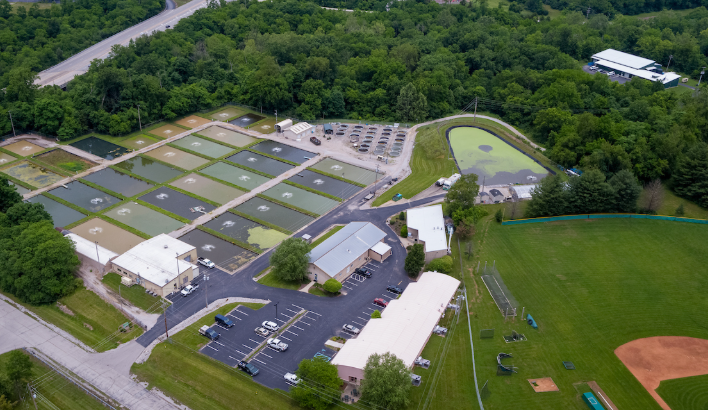
The university’s School of Aquaculture and Aquatic Sciences (SAAS) is one of the most specialised and well-resourced aquaculture research programmes in the United States. The Aquatic Research Center (ARC) is a genuinely impressive facility:
- 33 research ponds (24 at 0.1 acre, 9 at 0.05 acre)
- A 3,000-square-foot hatchery for spawning, holding, and experimental tanks
- A 3,500-square-foot nutrition laboratory, genomics lab, and fish disease diagnostic laboratory
- A 14,400-square-foot Aquatic Production Technologies Laboratory — a state-of-the-art indoor, closed-system facility supporting year-round controlled-environment production research across multiple species, including recirculating systems, a water-quality lab, and a genetics lab
Current species under investigation include largemouth bass, channel catfish, hybrid striped bass, tilapia, koi, paddlefish, freshwater prawns, Australian redclaw crayfish, saltwater shrimp, flounder, and freshwater mussels.
For a graduate student in aquaculture science, this research infrastructure is exceptional — access to this range of species, facilities, and research environments is rare even among dedicated aquaculture programmes.
The Research: What You Will Work On
The assistantship is in Dr. Patrick Erbland’s lab and focuses on a specific, applied engineering-biology intersection: developing a smart fish feeding system that uses behavioural observation to estimate appetite and dispense food accordingly.
This is genuinely innovative applied research. Aquaculture feeding is one of the most significant cost and efficiency challenges in fish farming — overfeeding wastes expensive feed and degrades water quality, while underfeeding limits growth. A system that observes fish behaviour and adjusts feeding automatically based on real-time appetite estimation would be transformative for commercial aquaculture operations.
Your specific research tasks:
- Behavioural observation of fish to develop methods for estimating appetite level through observable indicators
- Design and build a prototype feeding system that dispenses food based on the appetite estimate — combining biology with engineering in a practical, deployable device
- Focus on low-cost sensors — video, audio, motion, and other sensor types — to keep the system accessible to real-world commercial operations rather than requiring expensive instrumentation
- Fulfil all KSU graduate school requirements for the Master’s degree
- Assist with other work and activities in the SAAS department
This project sits at the intersection of aquaculture biology, behavioural science, and applied engineering — requiring someone who is comfortable bridging disciplines and building things, not just observing them.
What the Position Pays and Covers
| Component | Detail |
|---|---|
| Annual salary | $30,000 USD |
| Hours per week | 20 hours |
| Tuition | Not automatically covered — grants to cover tuition may be pursued |
| Benefits | Not automatically covered |
| Start date | 15–16 August 2026 |
| Application deadline | Open until filled — review begins 15 June 2026 |
On tuition: This is an important point to understand clearly. The $30,000 salary is paid, but tuition fees are not automatically covered by this assistantship. The position states that grants to cover tuition may be pursued, meaning you can apply for additional funding to cover your tuition, but it is not guaranteed at the point of appointment.
For international students considering this position: US graduate tuition at a public university like KSU typically runs $8,000–$20,000 per year, depending on residency status. Factor this into your financial planning and ask Dr. Erbland directly about the realistic prospects for tuition funding in this specific project.
For US domestic students and those eligible for in-state or reduced tuition, the $30,000 salary combined with tuition grant prospects makes this a competitive offer.
Who Should Apply: Qualifications
Required qualifications:
- Bachelor’s degree in Engineering, Biology, or a related field — the combination of engineering and biology skills is central to the research design
- A valid US driver’s licence — required for fieldwork and site access
- Willingness to work long hours, including some weekends and holidays
- Ability to tolerate harsh field conditions — heat, cold, humidity, rain, insects
- Strong attention to detail and ability to follow protocols
- Strong organisational skills and ability to manage multiple tasks
- Strong verbal and written communication skills
Preferred qualifications:
- Experience conducting field and laboratory work related to aquaculture
- Experience designing and building prototype equipment — directly relevant to the smart feeder development component
- Proficiency with Python or another computer programming language — relevant for sensor data processing and system control
- Ability to work both independently and collaboratively
- Commitment to publishing findings in peer-reviewed journals
- Genuine interest in aquaculture as a field
The ideal candidate has both biological and engineering competency — someone who can observe fish behaviour and translate those observations into sensor-based detection systems and physical prototype development. This interdisciplinary profile is relatively rare, which means qualified candidates are genuinely sought rather than competing against hundreds of identical applicants.
How to Apply
Do not apply to the KSU Graduate School first. The application process for this assistantship starts with a direct email to the supervising faculty member.
Step 1: Prepare a single email to Dr. Patrick Erbland at patrick.erbland@kysu.edu with the subject line: “Smart Feeder MS application”
Step 2: Attach all four of the following in that email:
- Cover letter (maximum 1 page) describing your professional interests and why you are applying for this specific position
- Resume — academic and professional history
- Unofficial transcripts of all college-level work
- Contact information for 3 professional references — people who can speak to your academic ability, research experience, or technical skills
Step 3: If Dr. Erbland invites you to proceed, you will then apply formally to the KSU Graduate School.
Review of applications begins 15 June 2026. The position is open until filled — meaning it closes when a suitable candidate is selected, not on a fixed date. Apply as soon as you are ready rather than waiting.
Start date: August 2026, pending successful funding of the project.
Writing a Strong Cover Letter for This Position
Your cover letter is one page, and it needs to do a specific job — convince Dr. Erbland that you have the right combination of biological understanding and technical/engineering capability to execute this research.
What to include:
Your relevant technical background. If you have experience with sensors, data acquisition systems, programming, or building prototype equipment — describe it specifically. What did you build? What sensors did you use? What programming languages? The smart feeder project requires someone who can actually build the system, not just design it conceptually.
Your aquaculture or biology background. If you have field or lab experience with fish or aquatic systems, describe it. Knowledge of fish behaviour — even from coursework — is directly relevant to the behavioural observation component of the research.
Why this specific project? The cover letter should show that you have read the project description carefully and understand what it involves. Explain what draws you to the combination of behavioural science and sensor engineering for aquaculture feeding optimisation.
Your plans for graduate school. What do you want to get from a Master’s degree at KSU? Where do you see this research fitting into your longer-term career in aquaculture, engineering, or applied sciences?
About Frankfort, Kentucky
Frankfort is a small city of approximately 28,000 people, Kentucky’s state capital, located in the central Bluegrass region of the state. It is a quiet, affordable place to live compared to larger US cities, with a cost of living significantly below national averages.
For international students relocating to the United States for the first time, a smaller city with lower costs and a close-knit university community can be a more manageable first experience than moving directly to a major metropolitan area. The university’s relatively small size means graduate students have more direct access to faculty and facilities.
Frankfort is approximately 25 miles east of Lexington and 50 miles east of Louisville — two of Kentucky’s larger cities with airports, cultural amenities, and larger international communities.
Why Aquaculture: The Field Context
Aquaculture is one of the fastest-growing food production sectors in the world. Global fish consumption continues to rise as wild fishery catches plateau — meaning aquaculture must supply an increasing share of the world’s seafood demand. The Food and Agriculture Organization (FAO) projects that by 2030, aquaculture will supply more than half of all fish consumed globally.
For researchers, this growth trajectory means sustained investment in aquaculture science, technology, and production systems — and strong career prospects for graduates with relevant expertise. The specific focus of this research — smart, sensor-driven feeding systems — addresses a real commercial problem with significant market potential if the technology can be validated and scaled.
For African researchers and graduates specifically, aquaculture is a field with enormous direct relevance to food security and economic development across the continent. Experience gained in a world-class US aquaculture research programme translates directly into expertise applicable to fish farming development in Nigeria, Ghana, Kenya, Uganda, and across sub-Saharan Africa.
Honest Assessment: Is This Position Worth Pursuing?
For the right candidate — yes. Here is an honest picture.
The upside is real. $30,000 per year for a research assistantship is a competitive salary for a US Master’s student. The research is genuinely innovative, the facilities are exceptional, and KSU’s SAAS programme has a strong track record in aquaculture research. A Master’s from a US land-grant institution in a specialised field like aquaculture opens doors in academic research, government fisheries agencies, and commercial aquaculture operations globally.
The tuition question matters. Before accepting any offer, clarify the tuition situation with Dr. Erbland directly. Understanding what tuition costs, what grants are realistically available to cover it, and what your net financial position will be is essential planning for any graduate student — but particularly for international students who face higher tuition rates.
The field conditions requirement is genuine. This position involves fieldwork — outdoor pond work in Kentucky’s summer heat and humidity, potentially in rain, insects, and cold during autumn. This is not a primarily laboratory or desk-based position. Candidates who are not comfortable with physical fieldwork should assess this honestly before applying.
The driver’s licence requirement applies. A valid US driver’s licence is required. International students without a US licence will need to obtain one — this is usually straightforward but takes time after arrival.
Key Information at a Glance
| Item | Detail |
|---|---|
| Position | Graduate Research Assistant — Aquaculture |
| Institution | Kentucky State University, Frankfort, Kentucky, USA |
| Degree | Master of Science (MS) |
| Salary | $30,000 USD per year |
| Hours | 20 hours per week |
| Start date | August 15–16, 2026 |
| Application review begins | 15 June 2026 |
| Application deadline | Open until filled |
| Contact | patrick.erbland@kysu.edu |
| Subject line | “Smart Feeder MS application” |
FAQ
Is this position open to international students? The posting does not restrict nationality. International students are eligible to apply. However, a valid US driver’s licence is required — international applicants would need to obtain a US licence after arrival. Contact Dr. Erbland to confirm international applicant eligibility and discuss visa sponsorship if applicable.
Is tuition covered? Not automatically. The $30,000 salary is paid, but tuition is not guaranteed. The posting states grants to cover tuition may be pursued — ask Dr. Erbland directly about the current funding situation for tuition before accepting any offer.
Do I need prior aquaculture experience? Aquaculture experience is preferred but not required. The essential qualifications are a Bachelor’s degree in Engineering, Biology, or a related field and the core professional skills listed. Strong candidates with engineering or programming backgrounds and biology foundations should apply even without direct aquaculture experience.
Do I need to know Python? Python proficiency is listed as preferred, not required. If you have any programming experience, mention it. If Python specifically is not in your toolkit, other languages are mentioned as alternatives.
How do I apply? Email Dr. Patrick Erbland directly at patrick.erbland@kysu.edu with the subject line “Smart Feeder MS application” and attach your cover letter, resume, unofficial transcripts, and three references. Do not apply to the Graduate School first.
When should I apply? Now. Review begins 15 June 2026, and the position is open until filled — meaning it closes when someone is selected, not on a fixed date. Early applications have a significant advantage.
For more information and application:

