
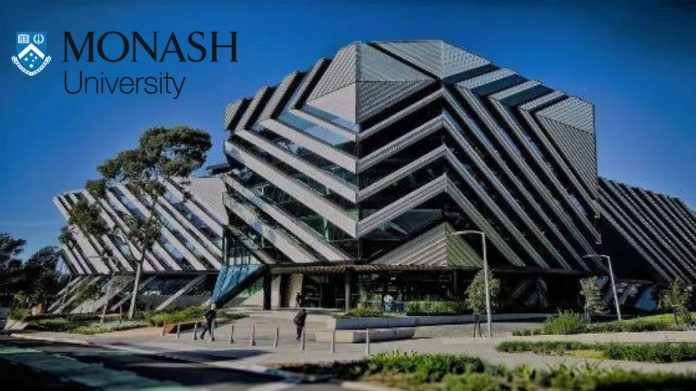
Sir James McNeill Postgraduate Research Scholarship 2026 — $53,608 Per Year to Research at Monash University Australia
Make extra money with PiggyVest: Here is a complete walkthrough
Interested in stock investment: Click here
If you are a postgraduate researcher working on something that genuinely matters — research that is environmentally responsible and socially beneficial, there is a scholarship at one of Australia’s most prestigious universities that will pay you $53,608 per year to pursue it.
The Sir James McNeill Postgraduate Research Scholarship (SJMN) at Monash University is one of the more distinctive fully funded research scholarships available in Australia. It is not a generic academic award. It was established specifically to support research that sits at the intersection of environmental responsibility and social benefit, making it a rare funding opportunity for researchers whose work addresses the world’s most pressing challenges.
This post covers everything you need to know: what the scholarship pays, who qualifies, which faculties are eligible, how to apply, and how to position yourself as a competitive candidate.
What Is the Sir James McNeill Postgraduate Research Scholarship?
The SJMN scholarship is funded by a private trust established in memory of Sir James McNeill, who had a long and significant association with Monash University. The scholarship reflects his commitment to research that goes beyond academic exercise — work that is grounded in real-world environmental and social responsibility.
Monash University is one of Australia’s leading research universities and consistently ranks among the top 100 universities in the world. It has campuses across Melbourne, with additional campuses in Malaysia and other international locations. A Monash postgraduate research degree carries significant weight globally, in academia, in government, in industry, and in the international development sector.
The SJMN scholarship is awarded through Monash’s graduate research scholarship system, which means it sits alongside other prestigious Monash and Australian government scholarships in terms of administration, terms, and conditions.
What the Scholarship Pays — In Full
This is where the SJMN stands out even among fully funded research scholarships.
| Benefit | Amount / Detail |
|---|---|
| Annual living allowance (stipend) | $53,608 AUD per year (2026 rate) |
| Research allowance | Provided — see Monash scholarship rates |
| Relocation allowance | Provided if eligible |
| Number of awards | One scholarship every two years |
| Next award round | October 2026 (31 October deadline) |
At $53,608 AUD per year, this stipend is significantly above what most research scholarships pay. For context, the standard Australian Research Training Programme (RTP) stipend for 2026 is approximately $34,000 AUD per year. The SJMN pays nearly $20,000 more annually, a meaningful difference that genuinely covers comfortable living costs in Melbourne without requiring additional employment.
Melbourne is one of the world’s most livable cities. It is also one of Australia’s more expensive cities — but $53,608 AUD per year is workable, particularly combined with the research and relocation allowances.
Who Can Apply: Eligibility in Full
The SJMN scholarship is open to a broader pool of applicants than many people assume. You are eligible if you fall into any of the following citizenship or residency categories:
- Australian citizen
- New Zealand citizen
- Australian permanent resident
- Australian humanitarian visa holder
- International student
That last category is important. This scholarship is explicitly open to international students, not just Australian citizens or residents. If you are a researcher from Nigeria, the UK, India, the US, or anywhere else in the world, you can apply.
Beyond citizenship, you must also meet all of the following:
You must have submitted a scholarship application in the year the scholarship is offered. The SJMN is awarded in the 31 October scholarship round only; this is non-negotiable. Applications from Rounds 1 through 4 of the same year in which the scholarship is offered will automatically be considered, but only if that year is an offering year (from R4/2024, the scholarship is offered once every two years).
Your research must be both environmentally responsible and socially beneficial. This is the defining eligibility requirement of this scholarship. It is not enough to be an excellent researcher — your specific research project must sit at the intersection of these two criteria. We will discuss how to frame this compellingly below.
You must meet Monash’s competitive scholarship selection process requirements. This involves academic excellence, research outputs, and prior research experience, the standard criteria for graduate research scholarship selection at Monash.
You must meet Monash’s English language proficiency requirements. For international students, this typically means IELTS 6.5 overall with no band below 6.0, or equivalent. Full details are on the Monash graduate research admissions page.
Faculty restriction: The scholarship is only available to students undertaking research within the following faculties:
- Faculty of Arts — School of Music only
- Faculty of Engineering
- Faculty of Medicine, Nursing and Health Sciences
- Faculty of Science
If you are in another faculty, Business, Law, Education, or IT, this scholarship is not available to you. Check Monash’s full scholarship database for alternatives.
The scholarship is also available to students undertaking Joint Research Awards where Monash University is the home institution.
What “Environmentally Responsible and Socially Beneficial” Actually Means
This is the part of the application that most candidates either misunderstand or underestimate.
The SJMN is not just looking for research that mentions sustainability or social impact in passing. The selection panel is looking for research that is fundamentally oriented around these twin goals — where environmental responsibility and social benefit are not add-ons to your methodology but central to your research question, design, and intended outcomes.
Think about what this means across the eligible faculties:
Engineering: Research into renewable energy systems, water purification technologies, sustainable infrastructure, green building materials, low-carbon transport systems, or technologies that reduce environmental harm while improving access for underserved communities.
Medicine, Nursing and Health Sciences: Research into the health impacts of environmental degradation, climate-related health vulnerabilities in at-risk populations, community health systems in resource-limited settings, or environmentally sustainable healthcare practices.
Science: Research into climate science, ecology and biodiversity conservation, environmental chemistry, sustainable agriculture, or earth systems science with clear social benefit outcomes.
Arts — School of Music only: This is the most distinctive eligibility. The School of Music’s inclusion suggests the scholarship values research that explores music’s role in community wellbeing, cultural preservation, social cohesion, or environmentally conscious performance practice.
When you write your research proposal and scholarship application, make the environmental responsibility and social benefit dimensions explicit — name them, define them, and show how your research methodology and expected outcomes directly serve both.
How Selection Actually Works — What Monash Is Looking For
Monash graduate research scholarships are described as “highly competitive,” and this is not marketing language. The university’s graduate research programme attracts applications from researchers around the world, and the SJMN adds the additional filter of research focus.
Selection is based on three criteria:
Academic excellence. Your undergraduate and postgraduate academic record. For competitive Monash scholarships, a First Class Honours degree or equivalent is typically the baseline — not a guarantee, but a minimum threshold for serious consideration.
Research outputs. Publications, conference papers, reports, or other documented outputs from your prior research activity. For early career researchers without publications, a strong Honours thesis or Master’s thesis can partially substitute, but documented outputs strengthen an application significantly.
Prior research experience. Have you worked as a research assistant? Have you completed a research-focused postgraduate degree? Have you contributed to a research project in a professional context? The more concrete your research experience, the stronger your application.
Given that only one scholarship is awarded every two years, the competition is effectively global, and the standard is extremely high. Your application needs to be exceptional across all three criteria — not just strong in one.
The Application Process — Step by Step
The SJMN application process is simpler than you might expect, because it is integrated into Monash’s standard graduate research admissions process. Here is exactly how it works:
Step 1 — Receive an invitation to apply from the relevant faculty. If you are a new applicant, you must first receive an invitation to apply from the relevant faculty before beginning your application. This means making contact with your intended faculty — and ideally a potential supervisor — before the formal application opens.
Step 2 — Submit your course application and scholarship application simultaneously. Graduate research scholarship applications are submitted at the same time as your course application, using Monash’s myApp Portal. You do not need to select specific scholarships — eligible applicants are automatically considered for all available graduate research scholarships for which they qualify.
Step 3 — Ensure your application is in the October round. The SJMN is awarded in the 31 October scholarship round only. Make sure your application is submitted and complete before 31 October. Applications from Rounds 1 through 4 of the same offering year will be automatically considered.
Step 4 — Meet all eligibility criteria. Your research must explicitly meet the environmental responsibility and social benefit criteria. Your academic record must be strong. Your English language proficiency must be documented. Your faculty must be one of the four eligible ones.
For current Monash students: If you are already enrolled, you still apply through the myApp Portal for the scholarship round.
Key Dates and Cycle Information
| Milestone | Detail |
|---|---|
| Application deadline | 31 October annually (when offered) |
| Scholarship offered | Once every two years from R4/2024 |
| Next offering year | Check with Monash — next after R4/2024 cycle |
| Results timeline | Check with Monash Graduate Research Admissions |
Important note on the two-year cycle: The SJMN is not offered every year. From Round 4/2024, it is offered once every two years. This means if you are considering applying, you need to confirm with Monash whether 2026 is an active offering year before investing significant time in your application.
Contact Monash Graduate Research Admissions to confirm:
- Email: mgro-apply@monash.edu
- Phone: +61 3 9905 1538
Tips for a Competitive Application
Secure a supervisor before you apply formally. The most competitive graduate research scholarship applicants at Monash — and at most Australian universities — have already identified and made contact with a potential supervisor before submitting their application. A supervisor who is enthusiastic about your research project will support your application through the faculty nomination process.
Frame your research around the SJMN criteria explicitly. Do not assume the selection panel will infer the environmental and social dimensions of your work. Name them. Explain them. Show how your research design, methodology, and expected outcomes serve both environmental responsibility and social benefit.
Strengthen your research profile before applying. If you have the option to publish a paper, present at a conference, or contribute to a research report before your application, do it. Research outputs are one of the three selection criteria and can be the differentiating factor between equally qualified candidates.
Contact Monash Graduate Research Admissions early. The admissions team can clarify eligibility questions, confirm the current offering cycle, and guide you on faculty-specific requirements. Use them — they exist to help applicants navigate the process.
Apply for other Monash scholarships simultaneously. Because you are automatically considered for all eligible scholarships through the myApp Portal, your SJMN application is also your application for other Monash graduate research scholarships. Make your overall application as strong as possible — not just for SJMN eligibility but for the full range of scholarship opportunities.
Why Monash and Why Australia
For international researchers considering their options, Monash and Australia deserve serious consideration beyond just the scholarship value.
Monash University is Australia’s largest university and one of its most research-intensive. It is a member of the Group of Eight, Australia’s eight leading research universities, and has strong international research partnerships, particularly across the Asia-Pacific region, Africa, and South Asia. A Monash research degree is globally recognised.
Australia as a research environment offers world-class infrastructure, a strong culture of research funding and support, and a genuinely multicultural academic community. Melbourne specifically is consistently rated one of the world’s most livable cities, with strong public transport, a rich cultural life, and a large international student community.
The Australian research ecosystem is also well-connected to international development, environmental policy, and public health sectors — all of which align naturally with the SJMN’s focus on environmentally responsible and socially beneficial research.
Honest Assessment: Is This Worth Pursuing?
Yes — for the right candidate, this is one of the most valuable research scholarships available in Australia.
The $53,608 AUD annual stipend is exceptional by any standard. One scholarship every two years means the competition is intense, but it also means the award carries significant prestige. Landing this scholarship is a meaningful career credential in itself.
The limiting factors are the faculty restriction (Engineering, Science, Medicine/Nursing/Health Sciences, or Music only) and the research focus requirement. If your research sits outside these areas or does not genuinely address environmental and social dimensions, this scholarship is not for you. If it does — and if your academic record is strong — this is worth significant preparation and effort.
The two-year cycle also means timing matters. Confirm the next offering year with Monash directly, and if 2026 is not an offering year, use the time to strengthen your research profile for the next cycle.
FAQ
Is this scholarship open to international students? Yes. International students are explicitly listed as eligible alongside Australian citizens, New Zealand citizens, permanent residents, and humanitarian visa holders.
Do I need to apply separately for this scholarship? No. You apply through Monash’s myApp Portal as part of your course application. Eligible applicants are automatically considered for all available graduate research scholarships — you do not need to select SJMN specifically.
Which faculties are eligible? Engineering, Medicine, Nursing and Health Sciences, Science, and the Faculty of Arts (School of Music only). Other faculties are not eligible.
How much does the scholarship pay? $53,608 AUD per year (2026 rate), plus a research allowance and relocation allowance if eligible.
How often is this scholarship offered? Once every two years from Round 4/2024. Confirm the next offering year directly with Monash Graduate Research Admissions.
What is the application deadline? 31 October annually, in the years the scholarship is offered.
Do I need a supervisor before applying? You must receive an invitation to apply from the relevant faculty if you are a new applicant. Identifying and contacting a potential supervisor early significantly strengthens this process.
Where can I get more information? Visit monash.edu/graduate-research/study/apply or contact the Graduate Research Admissions team at mgro-apply@monash.edu or +61 3 9905 1538.
For more information and application:
Visit the official website of the Sir James McNeill Postgraduate Research Scholarship 2026

