
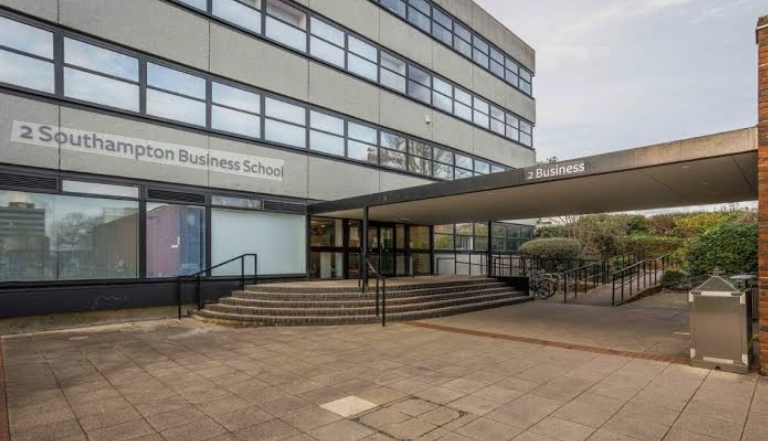
Southampton MBA Excellence International Scholarship 2026 — Win Up to £13,000 Toward Your MBA in the UK
If you are planning to study an MBA in the United Kingdom and you want to significantly reduce what it costs you, without filling out a separate scholarship application, the Southampton Business School MBA Excellence International Scholarship is one of the most straightforward funding opportunities available right now.
Up to £13,000 is available to both UK and international students. You do not apply for the scholarship separately. You apply to the MBA programme by 31 July 2026, and if you receive an offer, you are automatically considered. The scholarship is then awarded based on an interview, meaning your professional record, your leadership trajectory, and how you present yourself in conversation are what determine whether you win and how much you receive.
This post covers everything you need to know — who qualifies, how the interview works, what the scholarship committee is actually looking for, and how to position yourself as the strongest possible candidate.
What Is the Southampton MBA Excellence International Scholarship?
The scholarship is offered by the Southampton Business School at the University of Southampton, a Russell Group research university consistently ranked among the UK’s top 20 institutions. Southampton’s MBA programme attracts a genuinely international cohort, and this scholarship is designed to attract the most professionally accomplished candidates by offsetting a significant portion of the programme cost.
Three award levels are available:
| Award | Amount |
|---|---|
| Top award | £13,000 |
| Mid award | £10,000 |
| Entry award | £7,000 |
The amount you receive is determined entirely by your performance at the interview. This is not a fixed award — it scales with how well you demonstrate the criteria the scholarship panel is assessing. A candidate who performs exceptionally at the interview can receive £13,000. A candidate who performs well but not outstandingly may receive £7,000. The distinction lies entirely in the quality of the interview.
Who Is Eligible
The eligibility criteria are refreshingly simple compared to many scholarship programmes.
You must:
- Have received a conditional or unconditional offer of a place on the Southampton MBA programme
- Be studying the MBA — not any other postgraduate programme
- Not be in receipt of any external scholarship
That last point is important. If you are receiving funding from another source — a government scholarship, an employer bursary, or an external award — you are not eligible for this scholarship. The programme is designed for self-funded students who need merit-based institutional support.
There is no stated minimum academic grade, no minimum IELTS score requirement beyond Southampton’s standard MBA admissions requirements, and no country restriction on international applicants. Both UK and international students are eligible.
How It Works — No Separate Application Required
This is where the Southampton MBA scholarship stands out from most similar awards. You do not need to complete a separate scholarship application form. You do not need to write scholarship essays in addition to your programme application. You do not need to find references specifically for the scholarship.
The process is:
Step 1: Apply to the Southampton MBA programme through the university’s standard admissions process by 31 July 2026.
Step 2: Receive a conditional or unconditional offer of a place on the MBA.
Step 3: Southampton automatically considers you for the scholarship. They will invite shortlisted candidates to a scholarship interview.
Step 4: Complete the scholarship interview. Your award amount is determined by your performance.
The implication of this structure is significant. Every MBA applicant who receives an offer is in the scholarship pool. The quality of your MBA application — particularly the professional experience, leadership narrative, and career progression it demonstrates — determines whether you are shortlisted for the scholarship interview.
This means your MBA application and your scholarship consideration are inseparable. A strong MBA application is a strong scholarship application.
What the Interview Assesses — In Detail
The scholarship award is based entirely on interview performance. Understanding exactly what the panel is assessing is essential preparation.
Southampton specifies five criteria:
1. A High Degree of Relevant Professional Experience in Management and/or Leadership
This is the primary criterion and the one with the most weight. The scholarship is not for early-career candidates with impressive academic records — it is for professionals who have genuinely operated in management or leadership roles and can demonstrate that through specific, verifiable experience.
“Management and/or leadership” is broadly defined but the key word is “high degree.” This suggests the scholarship is particularly targeting candidates with five or more years of professional experience, ideally including direct management of people or significant project/organisational leadership responsibility.
In your interview, you need to be able to speak specifically about teams you have managed, decisions you have made, challenges you have navigated, and outcomes you have delivered — not in abstract terms but in concrete, evidenced stories.
2. Evidence of Rapid Career Progression
Rapid progression means you have moved through your career faster than peers — taking on more responsibility earlier, being promoted ahead of standard timelines, or building something significant in less time than would normally be expected.
The panel is looking for trajectory as much as current position. A 30-year-old who is already a senior manager or director in their field is demonstrating rapid progression. Someone who has been at the same level for eight years without advancement is not, regardless of their seniority.
Prepare to speak to your career timeline specifically — when you started, what levels you have moved through, what drove each progression, and where you sit relative to peers who started at the same time.
3. Clear Ability to Contribute to the Quality of the MBA Cohort
This criterion is about what you bring to the learning environment, not just what you will get from the MBA. Every strong MBA programme is partly built on peer learning, and the scholarship panel wants candidates who will elevate the experience for everyone around them.
Think about what makes your perspective, your experience, or your knowledge distinctive. What industry do you come from? What geography? What functional specialism? What challenges have you solved that other cohort members are unlikely to have encountered? What can you teach others?
In your interview, this comes through most clearly when you discuss your professional background with genuine substance and when you speak to how you have contributed to teams and organisations, not just individually performed.
4. Strong Academic Ability and Performance
This is the only purely academic criterion, and it is listed fourth, after three professionally focused criteria. The scholarship is not primarily an academic merit award. But strong academic performance is still a factor, particularly if it is recent.
If your academic record is strong — a First or 2:1 from your undergraduate degree, strong GMAT or GRE scores if submitted, strong performance in any postgraduate work — make sure this is visible in your application and referenced naturally in your interview.
If your academic record is less strong but your professional record is exceptional, the first three criteria carry enough weight to compensate in most cases.
5. Excellent Performance at Interview
This is the meta-criterion — how well you present everything above in the interview itself. A candidate with genuinely exceptional professional credentials who communicates poorly, gives vague answers, or fails to connect their experience to the scholarship criteria will receive a lower award than a candidate with slightly less impressive credentials who communicates brilliantly.
Interview excellence in this context means: specific, structured answers (using the STAR framework — Situation, Task, Action, Result); confident but not arrogant self-presentation; genuine engagement with the panel’s questions rather than reciting prepared speeches; and the ability to connect your background clearly to why this MBA and this scholarship are the right fit at this moment.
How to Prepare for the Scholarship Interview
Given that the interview is everything — it determines both whether you receive the scholarship and how much — preparation is not optional.
Know Your Professional Story Cold
Be able to describe your career trajectory clearly and compellingly in under three minutes. Where you started, the key moves you made, what drove each transition, what you are most proud of, and where you are now. This narrative should be second nature — not something you think about in the moment.
Prepare Three to Five STAR Stories
Select your three to five strongest professional stories — moments where your leadership, decision-making, or management made a genuine difference. Prepare each as a tight STAR story: Situation (context), Task (your specific responsibility), Action (what you did and why), Result (what happened). These stories are the raw material for almost every question a scholarship panel will ask.
Strong stories for this type of interview typically involve: leading a team through a difficult situation, making a strategic decision with incomplete information, turning around a failing project or team, navigating significant organisational change, or delivering an outcome that exceeded expectations.
Research the Southampton MBA Programme Specifically
Be able to speak to why Southampton specifically — not just why you want an MBA in general. What aspects of the programme design, the faculty, the cohort, or the career outcomes are particularly relevant to where you are going professionally? The more specific your answer, the more credible your commitment.
Practice Out Loud
Thinking through your answers in your head is not the same as delivering them under pressure in a real interview. Practice out loud — ideally with someone who will give you honest feedback. A recorded practice session where you watch yourself back reveals things that no amount of internal rehearsal does.
Prepare Questions for the Panel
The interview will almost certainly give you the opportunity to ask questions. Have three specific, intelligent questions prepared — about the cohort, the programme structure, career outcomes for recent graduates, or the scholarship panel’s own experience of the programme. Strong questions signal genuine engagement. Asking nothing signals indifference.
Why the Southampton MBA
For candidates considering an MBA in the UK, Southampton offers a combination of factors worth understanding:
Russell Group credibility. Southampton is a member of the Russell Group — the UK’s 24 leading research-intensive universities. A Southampton MBA carries the institutional credibility that a Russell Group affiliation brings.
International cohort. Southampton attracts a genuinely diverse international MBA cohort — which means the peer learning, the network, and the post-MBA relationships span geographies in a way that matters for global career ambitions.
Value relative to London programmes. Southampton’s MBA tuition is significantly lower than London Business School, Imperial College Business School, or other London-based programmes — while the Russell Group institutional credibility is equivalent. The scholarship further reduces the cost differential.
Key Dates
| Milestone | Date |
|---|---|
| Application deadline for MBA (to be considered for scholarship) | 31 July 2026 |
| Scholarship interview | After receiving your MBA offer |
| Scholarship award notification | After interview |
The 31 July deadline is the firm gate. If you do not have an MBA application submitted by this date, you will not be considered for the scholarship regardless of your qualifications.
Honest Assessment — Is This Worth Pursuing?
For MBA candidates who meet the professional experience criteria, yes, absolutely.
£13,000 is a meaningful reduction in programme costs, and the process of earning it requires no additional paperwork beyond what you are already doing to apply for the MBA. The interview is a selection event, but it is also an opportunity — a well-prepared candidate with a strong professional record has a realistic shot at the top award, not just the minimum.
The key reality check is the professional experience requirement. If you are early in your career without significant management or leadership experience, this scholarship is not primarily designed for you — the criteria are explicitly skewed toward candidates with substantial professional records. If you have five or more years of professional experience, including management or leadership responsibility, and your career shows genuine upward progression, you are in the target candidate group.
Apply for the MBA. Prepare seriously for the interview. The scholarship is there to be won by the candidate who demonstrates it most convincingly.
FAQ
Do I need to apply for the scholarship separately? No. Apply for the Southampton MBA programme by 31 July 2026, and you will be automatically considered. There is no separate scholarship form.
Can international students apply? Yes. The scholarship is explicitly open to both UK and international students.
What is the minimum academic requirement? Southampton does not state a specific minimum grade for the scholarship — only that you must receive an offer on the MBA programme. The MBA’s own entry requirements apply. Check Southampton’s official MBA admissions page for current entry criteria.
Can I hold this scholarship alongside a company-sponsored bursary? No. You must not be receiving any external scholarship. A company-sponsored bursary is likely to be considered an external scholarship — clarify with Southampton’s admissions team before applying if you have any employer financial support.
Is there a minimum IELTS requirement? The scholarship itself does not state a separate IELTS requirement. You need to meet Southampton’s English language requirements for admission to the MBA programme. Check Southampton’s MBA admissions page for the current English language requirements.
When will I find out if I have been awarded the scholarship? After your scholarship interview. Southampton does not publish a specific timeline — expect to hear within a few weeks of the interview.
What if I perform well at the interview but do not receive the top award? The award amount is determined by your interview performance. You may receive £13,000, £10,000, or £7,000, depending on how the panel assesses your performance against the five criteria. Even the £7,000 award is a meaningful contribution toward your MBA costs.
Where do I apply for the MBA? Through the University of Southampton’s official admissions portal. Search “Southampton MBA application” on southampton.ac.uk or visit the Southampton Business School website directly.
For more information and application:
Visit the official website of the Southampton MBA Excellence International Scholarship 2026

